Plural Marriage and the Bible
Explore biblical polygamy, Christian plural marriage, and sacred marriage covenants throughout Scripture. The Way Church of Illumination recognizes consensual plural marriage as an optional sacred religious covenant rooted in faith, equality, mutual commitment, and freedom of conscience, while respecting applicable civil laws.
Sacred Marriage Covenants: Faith, Love, and the Freedom to Choose
Exploring Biblical Plural Marriage Through Scripture, Conscience, and the Unchanging Character of God
At The Way Church of Illumination, we believe marriage is more than a social institution or legal arrangement. At its highest expression, marriage is a sacred and holy covenant—a voluntary commitment of love, faithfulness, spiritual unity, and lifelong responsibility before Heavenly Father.
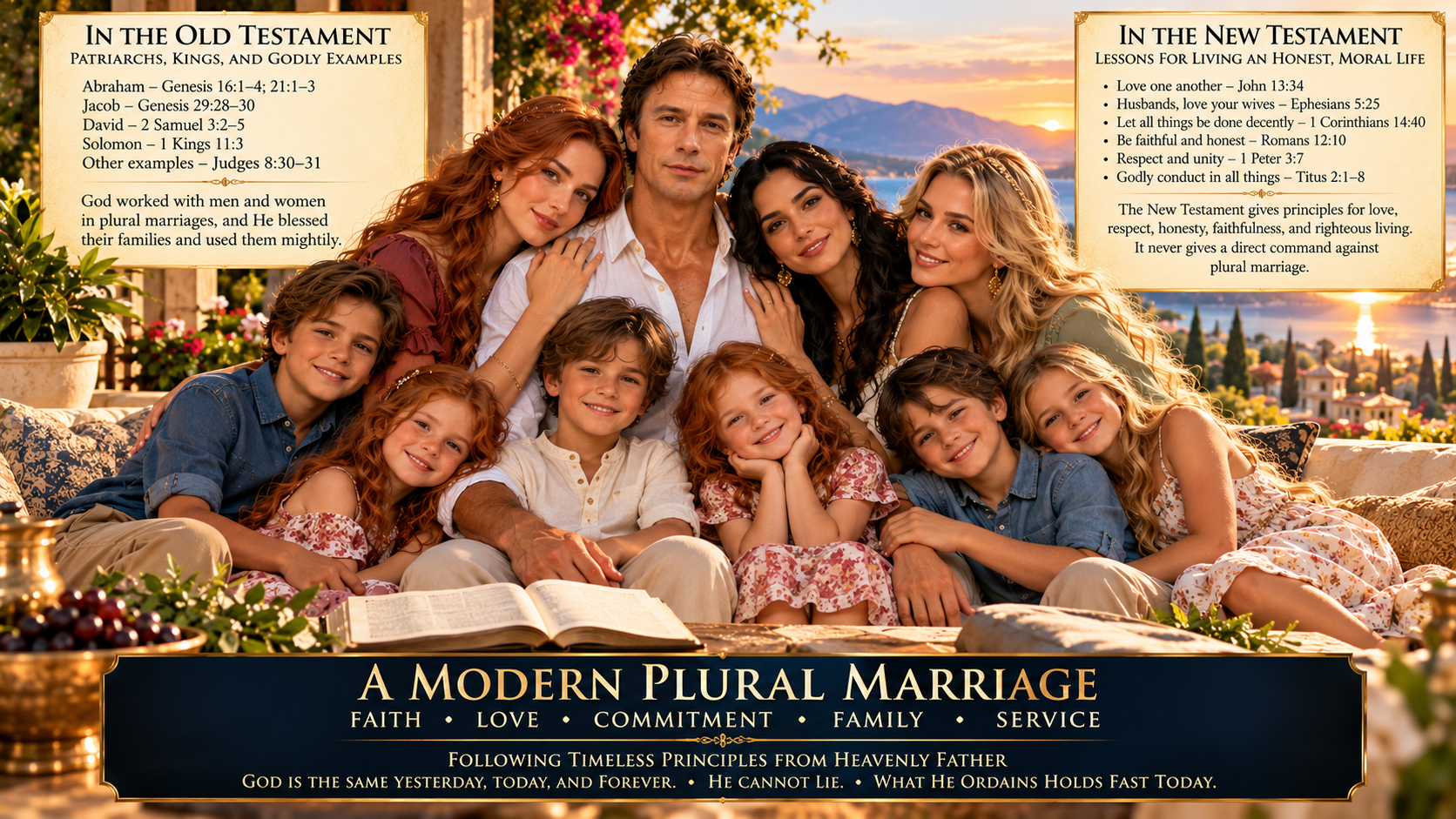
We honor monogamous marriage, and we also recognize consensual plural marriage as an optional sacred religious covenant for adults who sincerely believe they are called to share their lives in this way.
Plural marriage is not for everyone, nor is it a requirement for salvation, spiritual advancement, or membership in our church. It is a deeply personal commitment that demands exceptional maturity, honesty, compassion, mutual respect, and dedication to the well-being of every family member.
For those who freely embrace this path and faithfully fulfill its responsibilities, we believe a plural family can offer abundant blessings: expanded companionship, shared spiritual growth, greater opportunities for mutual support, collective service, and a household enriched by the love and contributions of each individual.
These blessings are possibilities, not guarantees. Like every marriage, a plural covenant requires continuous effort, fairness, and the willingness to place love above selfishness.
Why Do We Recognize Plural Marriage as a Sacred Covenant?
Our understanding begins with the Scriptures themselves.
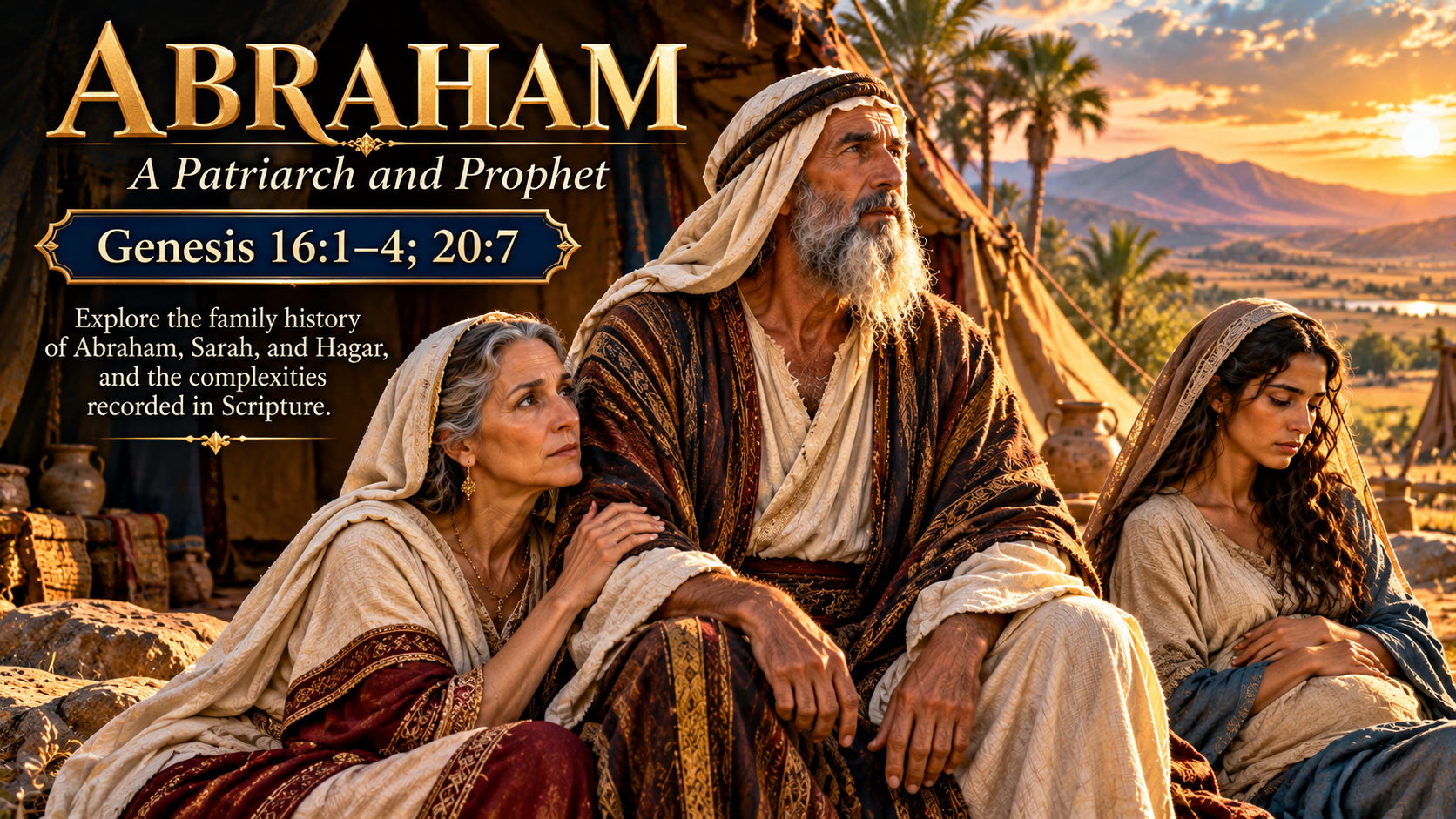
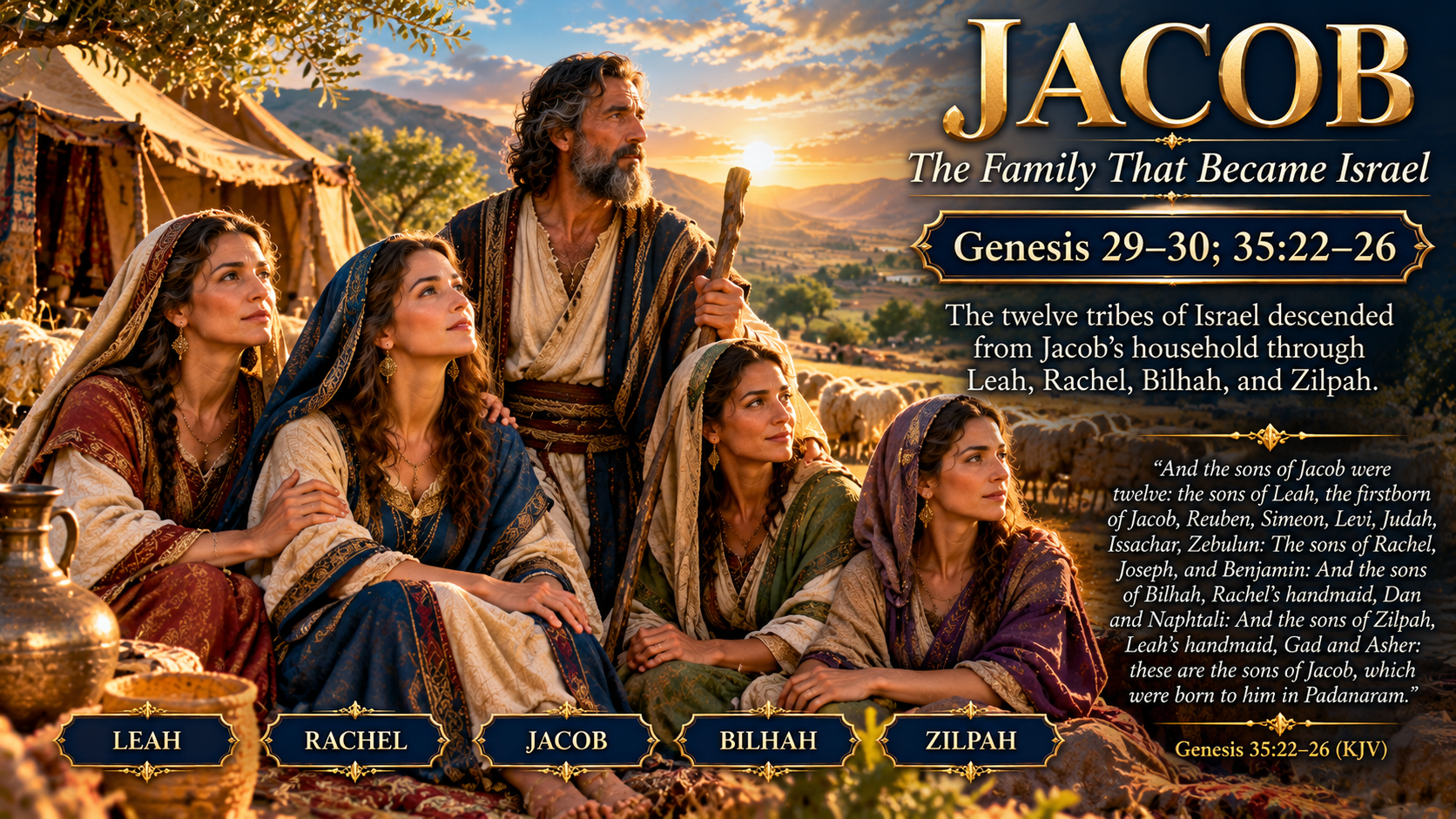
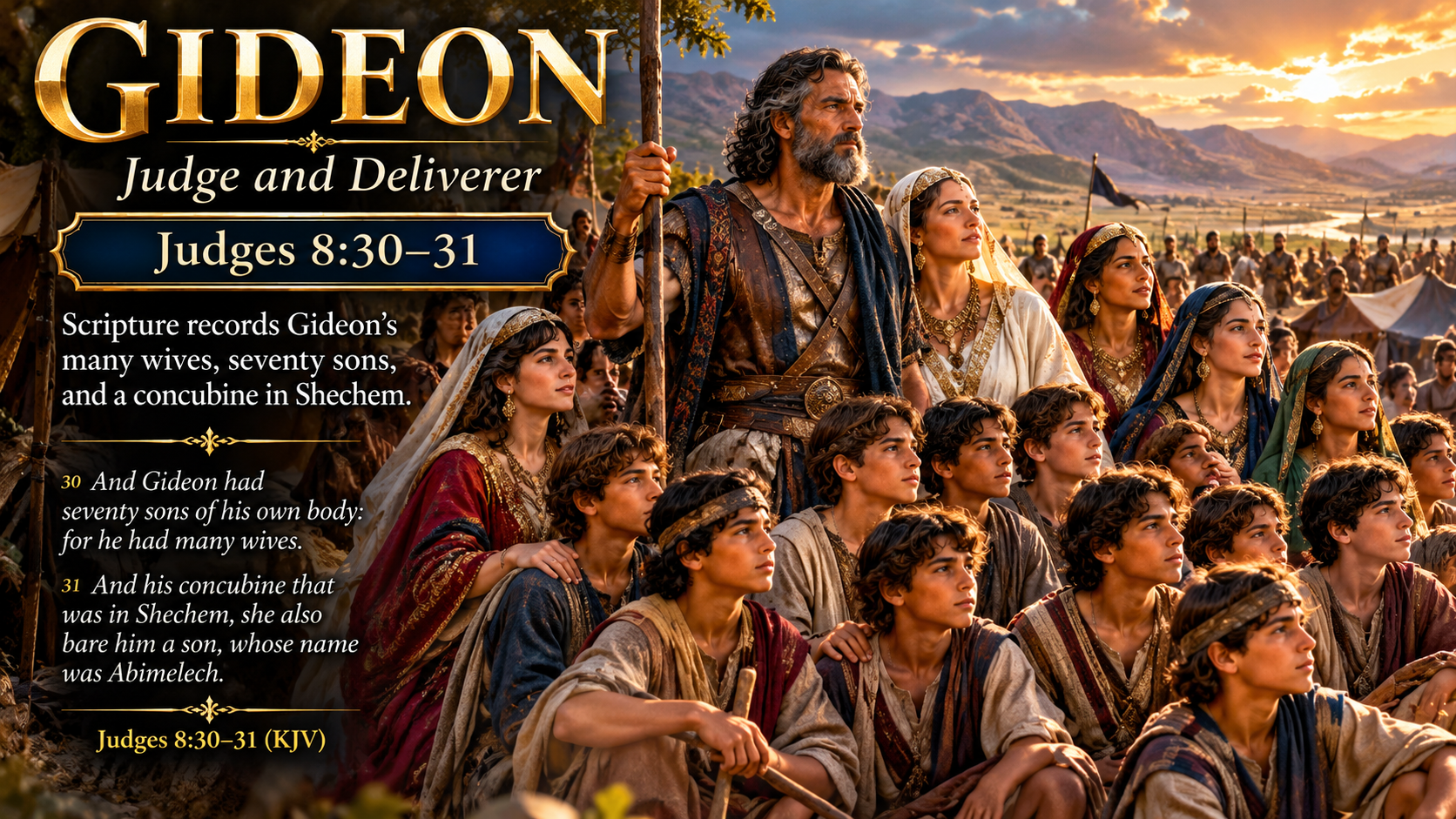
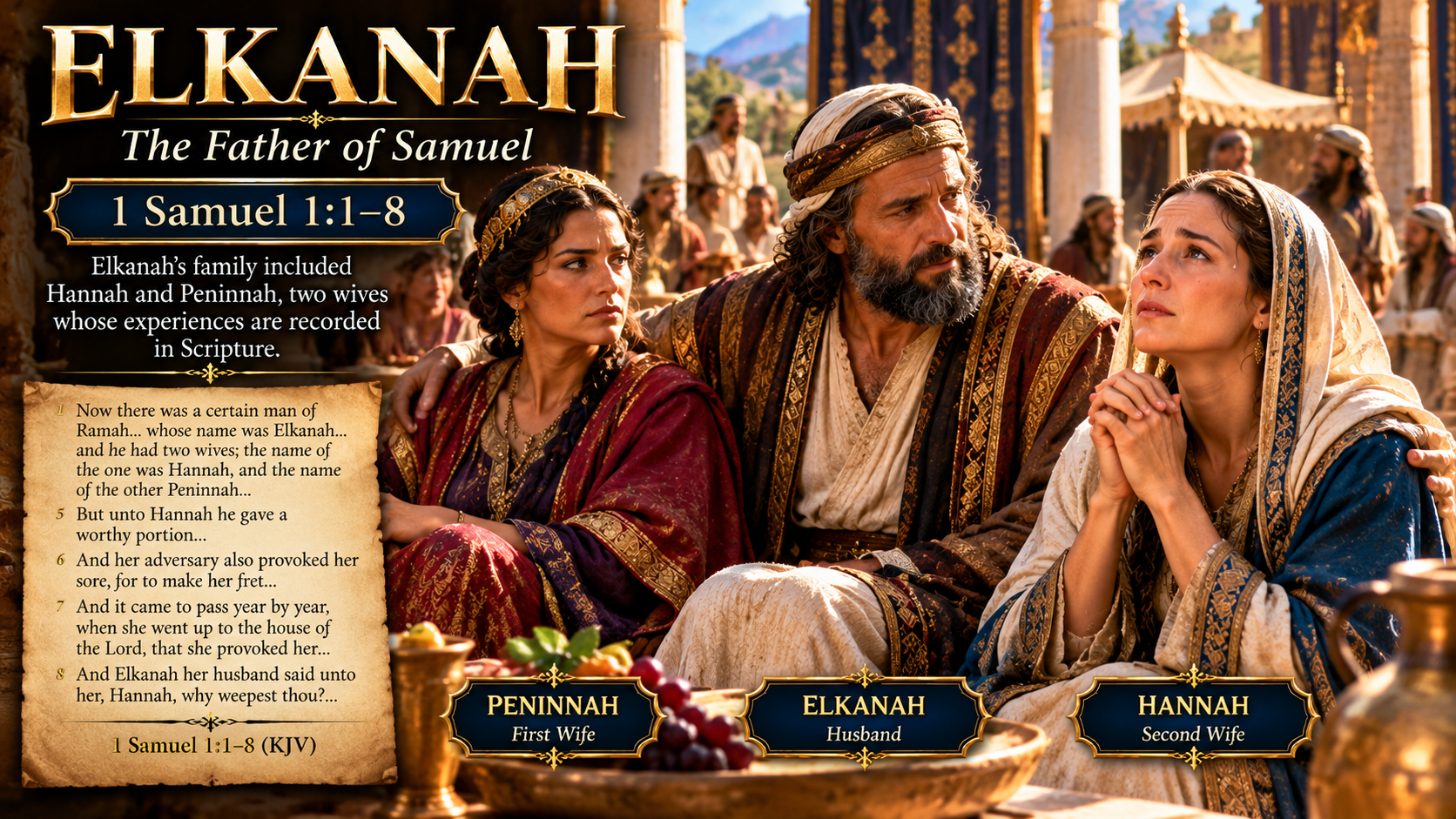
The Bible records plural marriages among prominent figures in Israel's history, including Abraham (Genesis 16:3), Jacob (Genesis 29–30), Gideon (Judges 8:30–31), Elkanah (1 Samuel 1:1–2), David (2 Samuel 3:2–5; 5:13), and Joash (2 Chronicles 24:2–3).
More significantly, the Mosaic Law expressly addressed responsibilities within plural households.
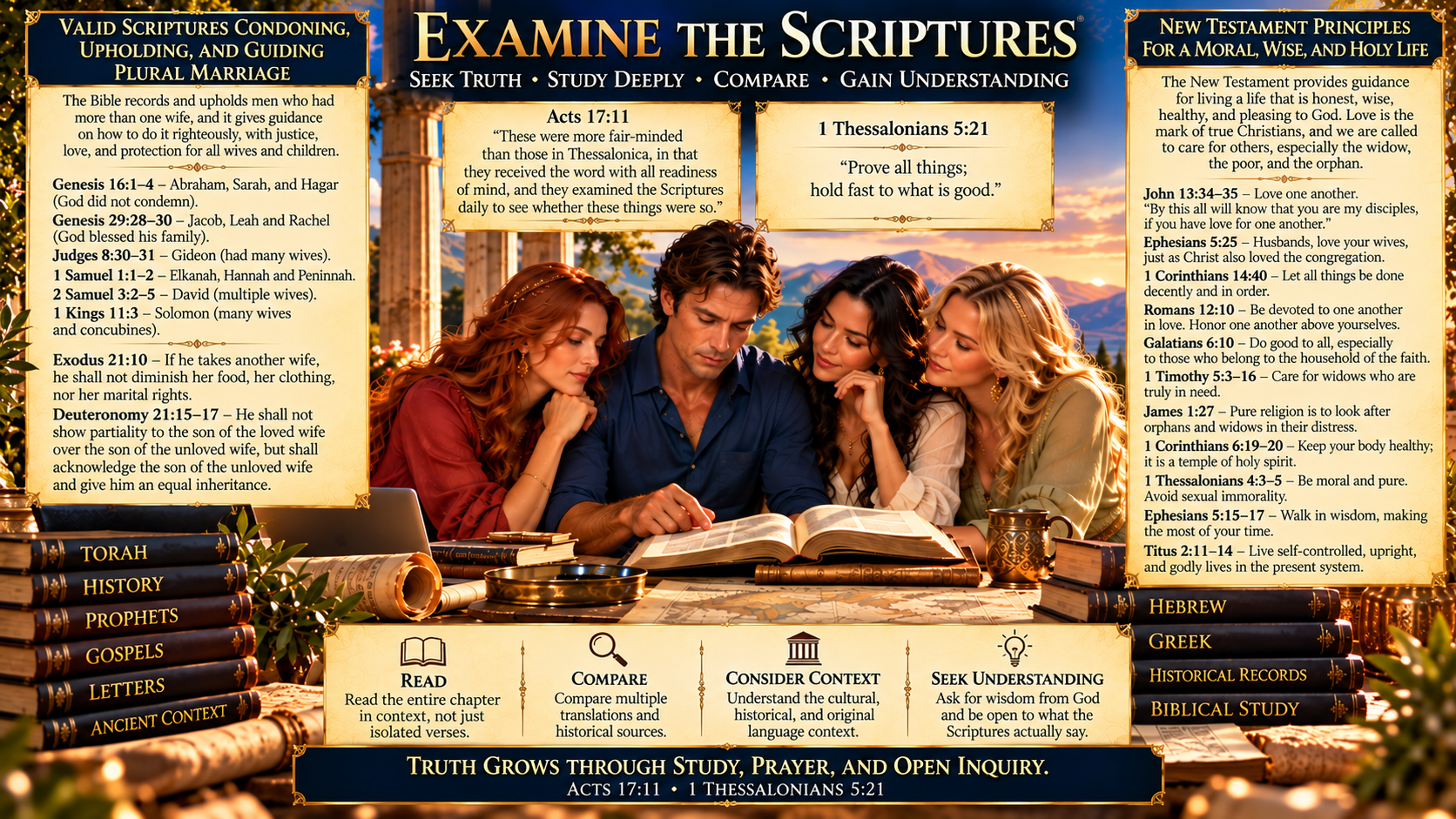
Exodus 21:10 required that a man's obligations to an existing wife not be diminished when he took another wife.
Deuteronomy 21:15–17 protected inheritance rights within families where a man had two wives, prohibiting favoritism that would deprive a firstborn son of his rightful inheritance.
These passages establish that plural marriage was not merely an isolated historical occurrence. It was a recognized family arrangement for which biblical law provided specific protections.
We also recognize that Jesus emphasized the sacredness and permanence of marriage in Matthew 19:3–9, while the apostle Paul taught mutual marital responsibility in 1 Corinthians 7:3–5. These passages are central to Christian understandings of marriage, and most Christian traditions interpret the New Testament as establishing monogamy as the Christian standard.
TWCI approaches the question through careful study of the entire biblical record. We observe that the New Testament does not contain a directly worded, universal prohibition expressly addressing every form of plural marriage, although its teachings are reasonably interpreted by many Christians as favoring exclusive monogamy.
Our position is therefore a matter of biblical and theological interpretation, not a claim that every Christian must reach the same conclusion.
The Consistency of God's Character
Malachi 3:6 declares that the Lord does not change.
Numbers 23:19 affirms that God does not lie.
James 1:17 describes the Father as unchanging in His goodness.
Hebrews 13:8 declares that Jesus Christ is the same yesterday, today, and forever.
We believe these passages call us to examine God's dealings with humanity thoughtfully and consistently. They do not mean that every provision of the Old Covenant remains unchanged under the New Covenant, but they do remind us that God's justice, truthfulness, and goodness are worthy of our trust.
For this reason, we believe the historical recognition of plural marriage in Scripture deserves careful examination rather than dismissal without study.
A Covenant of Equality, Never Domination
At TWCI, a sacred plural marriage covenant must never become an excuse for control, coercion, exploitation, or inequality.
Genesis 1:27 affirms that humanity is created in God's image.
Galatians 3:28 emphasizes spiritual unity and equal standing in Christ.
Ephesians 5:21 calls believers to mutual submission out of reverence for Christ.
1 Corinthians 13:4–7 teaches that genuine love is patient, kind, and not self-seeking.
We believe every adult within a covenant possesses equal human dignity, an independent conscience, and an equal voice in family decisions. No person should be compelled to enter or remain in a relationship through religious pressure, fear, or manipulation.
Children are precious individuals entrusted to our care. Their safety, stability, education, emotional well-being, and protection must always remain paramount (Psalm 127:3; Matthew 18:5–6).
We distinguish religious covenants from civil marriage. TWCI respects applicable civil laws and does not teach that a religious covenant creates additional legally recognized spouses where the law does not permit them.
An Invitation to Explore Scripture With an Open Heart
We invite you to explore the biblical evidence, examine the historical accounts, compare the teachings of Jesus and the apostles, and consider the responsibilities of marriage through prayerful reflection and honest inquiry.
Whether you believe in monogamous marriage, are researching biblical plural marriage, or simply wish to understand a perspective different from your own, you are welcome here.
We believe faith should encourage sincere questions, not silence them.
At The Way Church of Illumination, sacred marriage is not measured by the number of people in a household, but by the faithfulness of its commitments, the equality of its members, the love it demonstrates, and the responsibilities it fulfills.
One faith. Many paths of service. Every covenant rooted in love, conscience, and Christ.
The Sacred Covenant: Love, Unity, and the Blessings of a Faithful Household
A Commitment Before Heavenly Father
At The Way Church of Illumination, we believe that a sacred marriage covenant is not defined merely by its outward structure, but by the spiritual commitments and moral responsibilities of those who enter it.
Whether a marriage is monogamous or a consensual plural religious covenant, its foundation must be love, faithfulness, honesty, mutual respect, and devotion to Heavenly Father through Jesus Christ.
Plural marriage, as understood within TWCI, is neither a requirement nor a privilege that places one believer above another. It is an optional spiritual commitment that some adults may freely choose after serious reflection, prayer, and consideration of its lifelong responsibilities.
We believe that when such a covenant is entered with sincere intentions, genuine equality, and enduring love, it can become a source of profound blessings for those who share in it.
The Spiritual Blessings of a Plural Family
Scripture teaches that love, companionship, cooperation, and mutual support are among the great blessings of human relationships.
Ecclesiastes 4:9–12 reminds us that companionship provides strength, encouragement, and support in times of difficulty.
Romans 12:10 encourages believers to show sincere affection and honor one another.
Galatians 6:2 calls Christians to carry one another's burdens.
Psalm 133:1 celebrates the goodness of people dwelling together in unity.
Although these passages do not specifically command or endorse plural marriage, TWCI believes their principles can guide every household, including families who voluntarily enter plural covenants.
Within a loving and responsibly organized plural family, these blessings may include deeper companionship, shared responsibilities, spiritual encouragement, expanded opportunities for service, and a strong network of emotional and practical support.
Yet the abundance of a household's blessings must never be measured by its size. A larger family does not automatically create greater happiness or spiritual favor.
The true blessing lies in the quality of the love shared, the faithfulness of each commitment, and the willingness of every member to contribute to the peace and well-being of the family.
God's Unchanging Character and the Testimony of Scripture
The Bible repeatedly affirms the faithfulness and consistency of God.
Malachi 3:6 declares that the Lord does not change.
Numbers 23:19 teaches that God is not a man who lies.
James 1:17 describes the Father as unchanging in His goodness.
Hebrews 13:8 affirms that Jesus Christ is the same yesterday, today, and forever.
These passages provide an important foundation for our approach to biblical interpretation.
The Hebrew Scriptures document plural marriages among Abraham, Jacob, Gideon, Elkanah, David, and other significant figures. They also contain laws addressing the treatment of wives and the inheritance rights of children within plural households (Exodus 21:10; Deuteronomy 21:15–17).
We do not believe God's unchanging character means that every ancient covenantal regulation must remain in effect today. Scripture itself teaches that the relationship between the Old and New Covenants must be understood carefully (Hebrews 8:6–13).
Nevertheless, TWCI believes these historical accounts and legal protections deserve thoughtful examination when considering whether plural marriage is inherently incompatible with Christian faith.
Jesus' teaching concerning marriage in Matthew 19:3–9 and Paul's instructions in 1 Corinthians 7:2–5 remain central to that examination. We recognize that most Christian traditions interpret these passages as supporting exclusive monogamy.
Our understanding differs in that we do not regard the New Testament as containing an expressly worded universal prohibition addressing every form of plural marriage.
We therefore approach the question with humility, recognizing the distinction between direct biblical commands, historical practices, and theological conclusions.
Equality Is Essential to Every Sacred Covenant
At TWCI, we reject the belief that plural marriage grants one person the right to dominate others.
Every adult within a covenant possesses equal human dignity, independent conscience, and an equal voice in decisions affecting the household.
Genesis 1:27 establishes the shared dignity of humanity as created in God's image.
Galatians 3:28 affirms the equal standing of believers in Christ.
Ephesians 5:21 calls Christians to mutual submission out of reverence for Christ.
Philippians 2:3–4 teaches humility and concern for the interests of others.
No covenant is sacred simply because it is described as religious. Its conduct must reflect the love, justice, honesty, and compassion taught by Jesus Christ.
Every adult must enter freely, without coercion or manipulation, and must retain the freedom to leave without religious punishment. Each person must also have access to appropriate legal, financial, and personal protections.
Children: A Sacred Responsibility Above All Else
Children are never secondary to the desires or ambitions of adults.
Psalm 127:3 describes children as a heritage from the Lord.
Mark 10:13–16 records Jesus welcoming and honoring children.
Matthew 18:5–6 emphasizes the seriousness of protecting those who are vulnerable.
Ephesians 6:4 instructs parents to nurture children rather than provoke them.
TWCI believes every household has an obligation to provide children with safety, stability, education, emotional security, healthcare, and the opportunity to develop as individuals.
A family's religious beliefs must never be used to justify neglect, exploitation, or the denial of a child's rights.
Honoring Religious Freedom and Civil Law
TWCI recognizes a distinction between a sacred religious covenant and a legally recognized civil marriage.
We respect applicable civil laws and do not instruct members to violate them. A religious covenant does not create additional legal spouses, marital rights, or legal protections where civil law does not recognize them.
We also encourage careful consideration of property ownership, inheritance, parental responsibilities, financial independence, and the rights of every adult and child before entering any complex household arrangement.
Spiritual commitment must always be accompanied by practical responsibility.
A Journey of Faith, Not an Obligation
Plural marriage is not for everyone.
Some believers find their deepest fulfillment within monogamous marriage. Others may sincerely believe they are called to explore a consensual plural covenant.
TWCI honors freedom of conscience and does not consider either household structure a measure of a person's spiritual worth.
Our purpose is not to persuade every visitor to embrace plural marriage, but to provide a place where Scripture can be examined openly, historical evidence can be considered thoughtfully, and sincere questions can be asked without condemnation.
We believe the holiness of a covenant is demonstrated through love, faithfulness, equality, mutual sacrifice, and the protection of everyone within the household—not simply through the form that covenant takes.
As Jesus taught:
“By this shall all men know that ye are my disciples, if ye have love one to another.” — John 13:35 (KJV)
At The Way Church of Illumination, we invite you to continue exploring the Scriptures with an open mind, a discerning heart, and a sincere desire to follow Jesus Christ.
Seeking truth through Scripture. Honoring freedom of conscience. Building families through love, dignity, and responsibility.
Plural Marriage Through the Scriptures
A Biblical and Historical Examination of Marriage Among the Patriarchs, Judges, and Kings of Israel
What does the Bible actually reveal about plural marriage, and how extensively was it practiced throughout the history of ancient Israel?
The answer requires more than examining a single passage or considering the life of one biblical figure. Throughout the Hebrew Scriptures, plural marriage appears across generations, among different families, social classes, and periods of Israel's history.
From the earliest patriarchal narratives to the establishment of Israel's monarchy, the biblical record documents men who maintained more than one wife, households that included wives and concubines, and families whose descendants became central to the history of the nation.
Some of these individuals were entrusted with extraordinary responsibilities. Others were remembered for serious moral failures. Their circumstances differed, but together their accounts provide important historical evidence concerning the place of plural marriage within the ancient biblical world.
At The Way Church of Illumination, we believe these accounts should be examined individually, within their historical and scriptural contexts, rather than interpreted through assumptions about what the Bible must have said.
From the Patriarchs to the Nation of Israel
The earliest explicit reference to a man having two wives appears in Genesis 4:19, where Lamech is identified as the husband of Adah and Zillah.
Although Lamech's conduct is not presented as exemplary, this passage establishes the early appearance of polygyny within the biblical narrative.
Later, the account of Abraham introduces Sarah and Hagar. Genesis 16:3 records that Hagar was given to Abraham as a wife while Sarah was still living. The narrative also describes the unequal circumstances and suffering associated with Hagar's position, making it important to distinguish the existence of the arrangement from an endorsement of every aspect of it.
The family of Jacob provides an even more significant example.
According to Genesis 29:21–30 and Genesis 30:1–24, Jacob's household included Leah, Rachel, Bilhah, and Zilpah. These women became the mothers of the twelve sons whose descendants formed the tribes of Israel.
Genesis 35:22–26 identifies the sons and their respective mothers, preserving this family history within the scriptural record.
The significance is considerable: the ancestry of the twelve tribes of Israel emerged from a household involving multiple wives and concubines.
This does not mean that the jealousy, favoritism, and conflict recorded within Jacob's family were righteous. Rather, it demonstrates that the biblical narrative preserves the history of a plural household as part of Israel's foundational ancestry.
Plural Marriage Among Israel's Judges and Families of Faith
The practice did not disappear with the patriarchal period.
During the era of the judges, Judges 8:30–31 records that Gideon had many wives and seventy sons, in addition to a concubine in Shechem who bore Abimelech.
Gideon's account is especially relevant because he was called to deliver Israel from Midianite oppression, as described in Judges 6–7.
Yet his family history also illustrates the dangers of rivalry and the destructive pursuit of power, particularly in the subsequent account of Abimelech.
Another important example appears in the family of Elkanah.
1 Samuel 1:1–2 expressly identifies Hannah and Peninnah as Elkanah's two wives.
The account describes Elkanah participating in worship at Shiloh, while Hannah later becomes the mother of the prophet Samuel.
This narrative places a plural household within the immediate family history of one of Israel's most influential prophets.
The difficulties experienced by Hannah also provide an important reminder that the existence of a marital arrangement within biblical history does not mean that every relationship within it was harmonious or just.
Plural Marriage Within Israel's Monarchy
The biblical record becomes even more extensive during the reigns of Israel's kings.
David is among the most thoroughly documented examples.
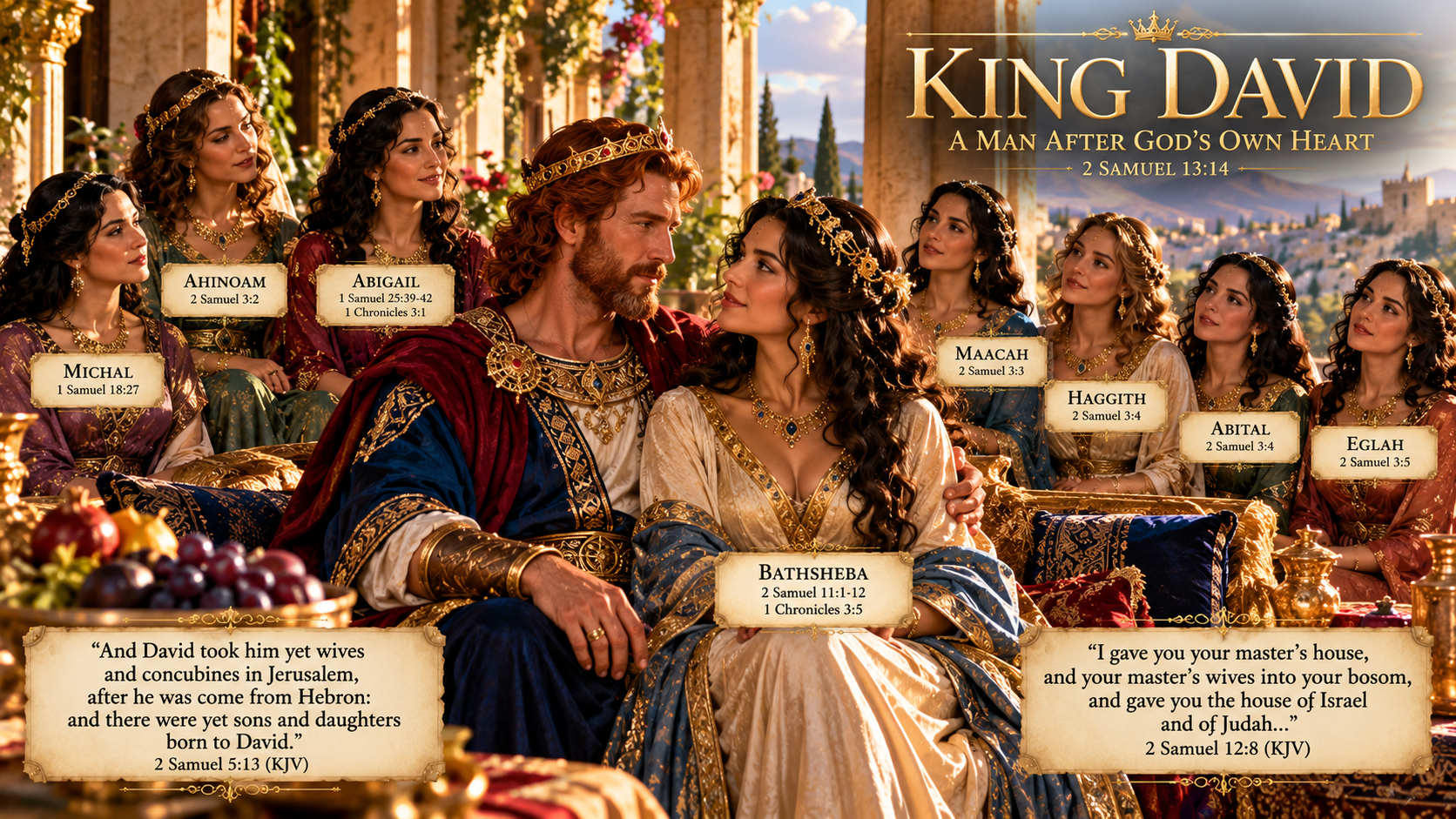
2 Samuel 3:2–5 identifies six wives who bore David sons during his reign in Hebron: Ahinoam, Abigail, Maacah, Haggith, Abital, and Eglah.
Other passages identify Michal and Bathsheba, bringing the number of individually named wives recorded across David's lifetime to eight.
Furthermore, 2 Samuel 5:13 records that David took additional wives and concubines after establishing himself in Jerusalem.
The biblical account therefore establishes that David maintained multiple marital relationships, although it does not provide a complete lifetime total or establish that all eight named wives were married to him simultaneously.
David's history is particularly significant because Scripture identifies him as both king and prophet (Acts 2:29–30), while also openly documenting his serious wrongdoing.
The distinction between these different aspects of his life deserves careful consideration.
Other kings are recorded as maintaining extensive plural households.
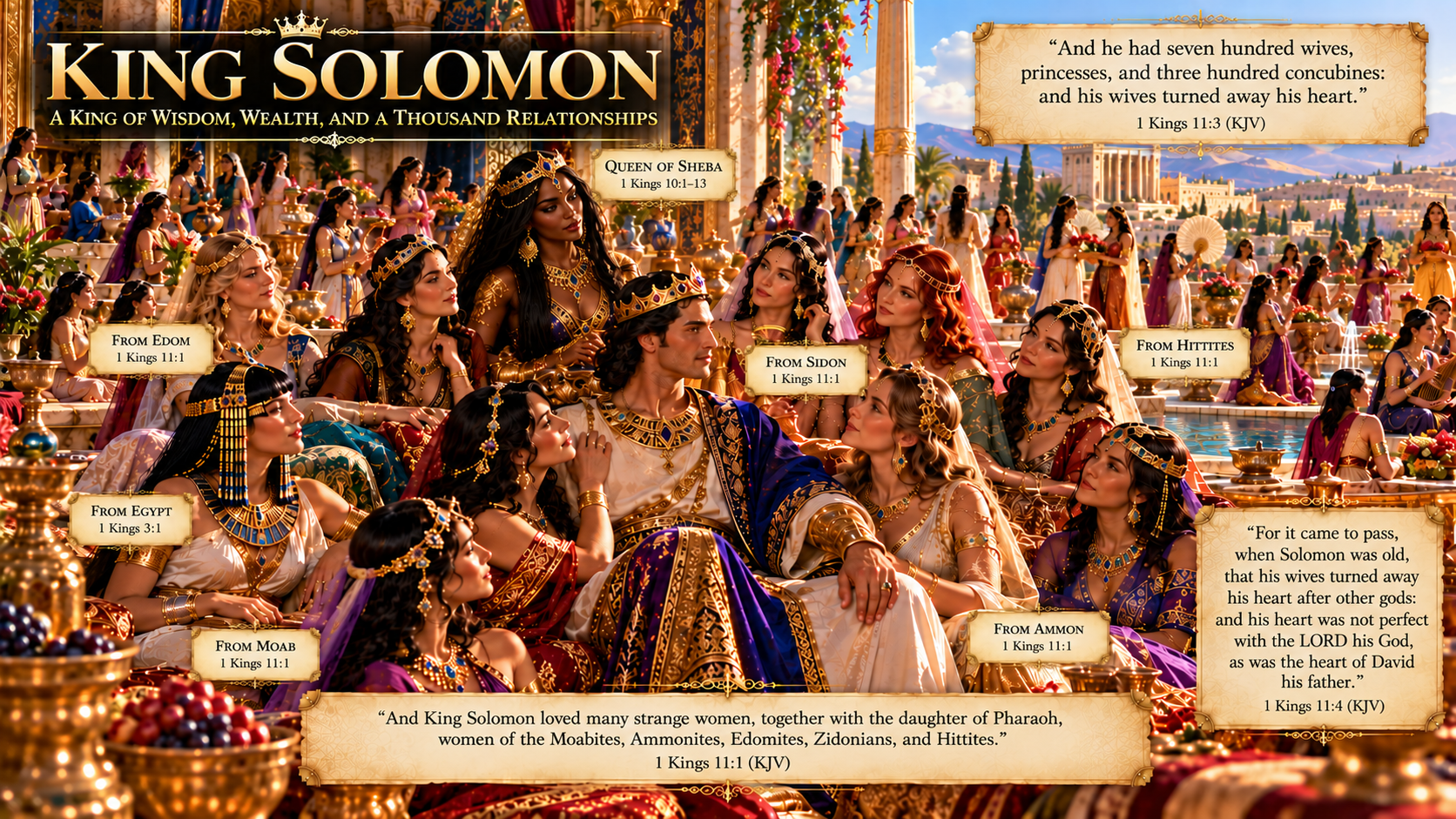
1 Kings 11:3 attributes seven hundred wives and three hundred concubines to Solomon.
2 Chronicles 11:21 records eighteen wives and sixty concubines for Rehoboam.
2 Chronicles 13:21 identifies fourteen wives belonging to Abijah.
2 Chronicles 24:2–3 records that Jehoiada the priest selected two wives for King Joash during the period in which Joash was described as doing what was right in the Lord's eyes.
These accounts establish that plural marriage continued to appear throughout Israel's royal history, although the Scriptures also contain explicit criticism of certain kings' conduct, including Solomon's marriages contributing to his spiritual unfaithfulness (1 Kings 11:1–8).
Recognizing the Difference Between Biblical Evidence and Assumption
A careful historical examination must distinguish between what Scripture explicitly documents and what readers might reasonably infer.
When the Bible identifies two wives by name, states that a man had many wives, or expressly records wives and concubines, the evidence is direct.
When Scripture describes a man having an exceptionally large number of children without identifying their mothers, the possibility of plural marriage may arise, but it remains an inference rather than a confirmed fact.
For example, Judges 12:9 records that Ibzan had thirty sons and thirty daughters. Judges 12:14 states that Abdon had forty sons and thirty grandsons.
These accounts are relevant to understanding family structures in ancient Israel, but they do not establish how many wives these men had.
This distinction is essential to responsible biblical research.
We believe a convincing examination of Scripture should never depend upon exaggerating the evidence, assigning unnamed wives without textual support, or presenting historical possibilities as established facts.
Understanding the Historical Record
Taken together, these accounts reveal that plural marriage was not confined to a single individual, family, or generation.
It appears in the early patriarchal narratives, the formation of Israel's tribal ancestry, the period of the judges, and the history of the monarchy.
The biblical record also demonstrates considerable variation in the circumstances surrounding these marriages.
Some households were associated with religious devotion and national leadership. Others experienced severe conflict, injustice, or spiritual decline.
The historical evidence establishes that plural marriage was practiced within ancient Israel; the theological question is how those practices should be evaluated in light of the full testimony of Scripture.
The distinction is important.
A biblical account may accurately describe a marriage without expressly commanding others to enter the same arrangement. Likewise, the moral failures of an individual do not necessarily establish that every aspect of that person's household was the cause of those failures.
For these reasons, we believe each passage should be examined according to its wording, historical setting, and place within the broader biblical narrative.
Following the Evidence, Verse by Verse
In the following study, we present the documented biblical examples in greater detail, beginning with the patriarchs and continuing through the judges, families of religious significance, and kings of Israel and Judah.
Where the Scriptures name individual wives, their names and corresponding references are provided. Where the text records additional unnamed wives or concubines, those relationships are identified without inventing names or unsupported totals.
We also distinguish confirmed plural households from cases where the evidence is uncertain.
This method reflects the principle expressed in Acts 17:11, which describes the careful examination of Scripture, and 1 Thessalonians 5:21, which encourages believers to test what they are taught.
Our intention is to make the biblical record accessible to readers who wish to investigate the subject personally, whether they are approaching plural marriage from a theological, historical, or comparative religious perspective.
The evidence deserves to be examined in its entirety—not to establish a conclusion before the investigation begins, but to understand what the Scriptures actually preserve about marriage, family, and covenantal life throughout biblical history.
We invite you to continue into the documented accounts, examine the references for yourself, and consider the historical testimony with careful attention to the text.